



Why an Air Locker Should Be the First Major Off-Road Upgrade for Your Sprinter

Traction First. Recovery Always.
When equipping a Sprinter for off-pavement adventure, owners often ask:
“Should I invest in traction upgrades or recovery gear first?”
The short answer:
-
- Build traction first (air locker)
-
- Then add recovery gear (winch + recovery kit)
Here’s why.
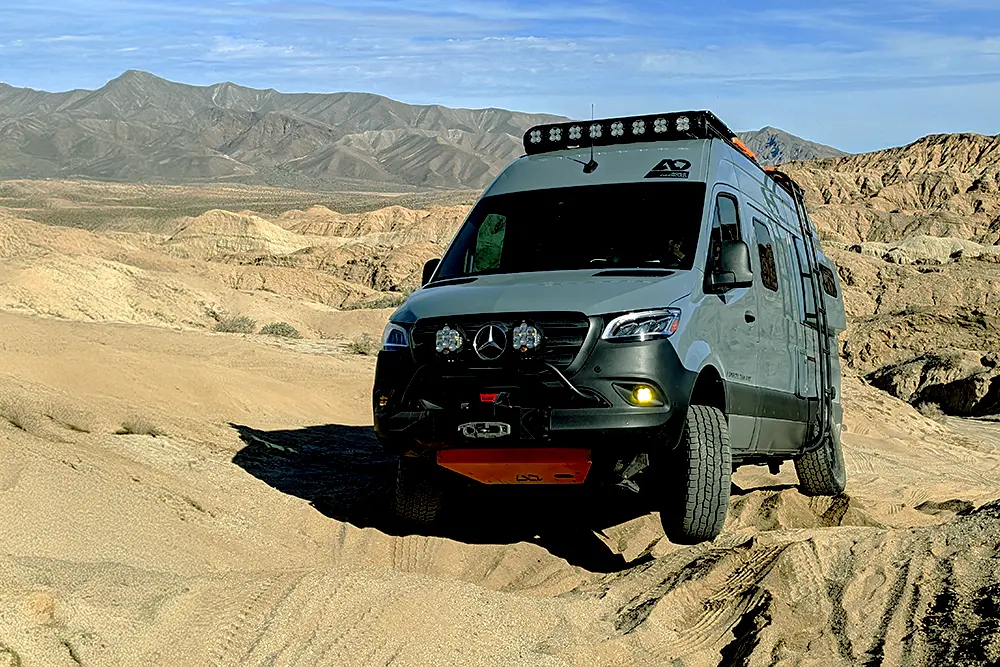
When building a Sprinter for offroad driving, the most important upgrade you can make is improving traction before preparing for recovery. An air locker directly addresses the most common reason Sprinters get stuck—loss of traction in uneven or loose terrain—while reducing how often winch and recovery tools are needed. The reason for this is the Sprinter’s open differentials. On 4wd Sprinters all three differentials are open, on AWD Sprinters the front and rear differentials are open with a locking transfer case/center differential, and on 2wd Sprinters the rear differential is open.
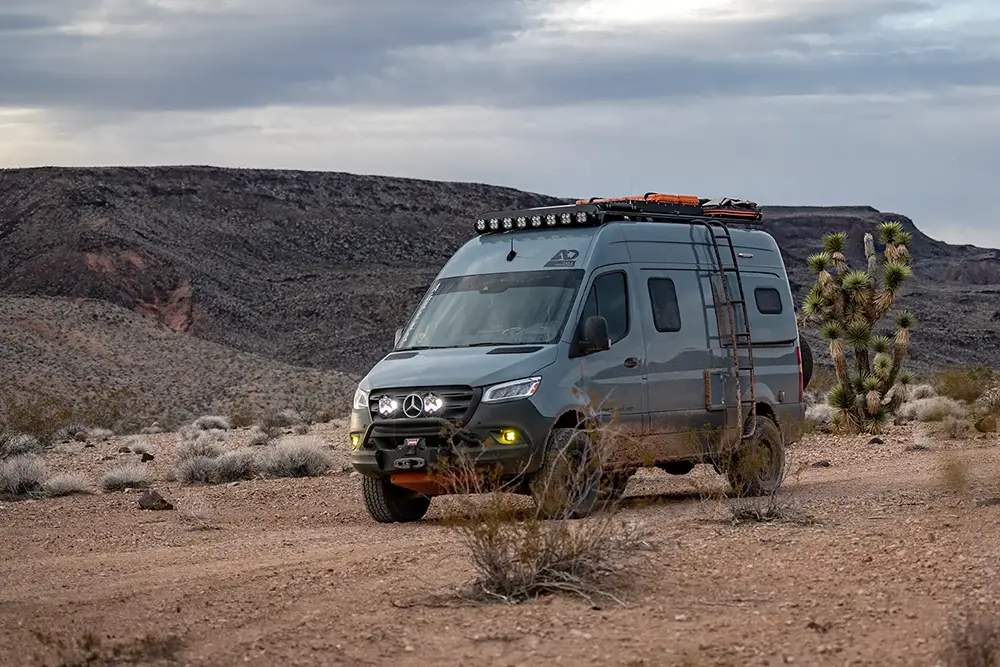
What is A Differential?
A differential is used to allow wheels to rotate at different speeds so that the vehicle can turn and not damage tires, axles, or other components. When a vehicle turns, the wheel on the inside of the turn needs to spin slower than the outside wheel. When going straight, the wheels need to turn at the same speed. It is called a differential because it differentiates wheel speed from side to side, facilitating smooth operation.
What is An Open Differential?
There are three types of differentials:
-
- Open Differential: This is the most common, and best option for street driving. An open differential can only send power to one wheel or the other, but never both.
-
- Locking Differential: There are many kinds of locking differentials available, from e-lockers to automatic lockers to air lockers. These lockers fully engage drive to both wheels on that axle simultaneously, resulting in a true 50/50 split of torque between the two wheels. When engaged, both wheels will spin at the same rate regardless of other conditions.
-
- Limited Slip Differentials: These use clutches or springs to divide torque distribution between the two axles and work on demand, but rarely offer full lockup of both axles and don’t usually allow for a true 50/50 torque split.
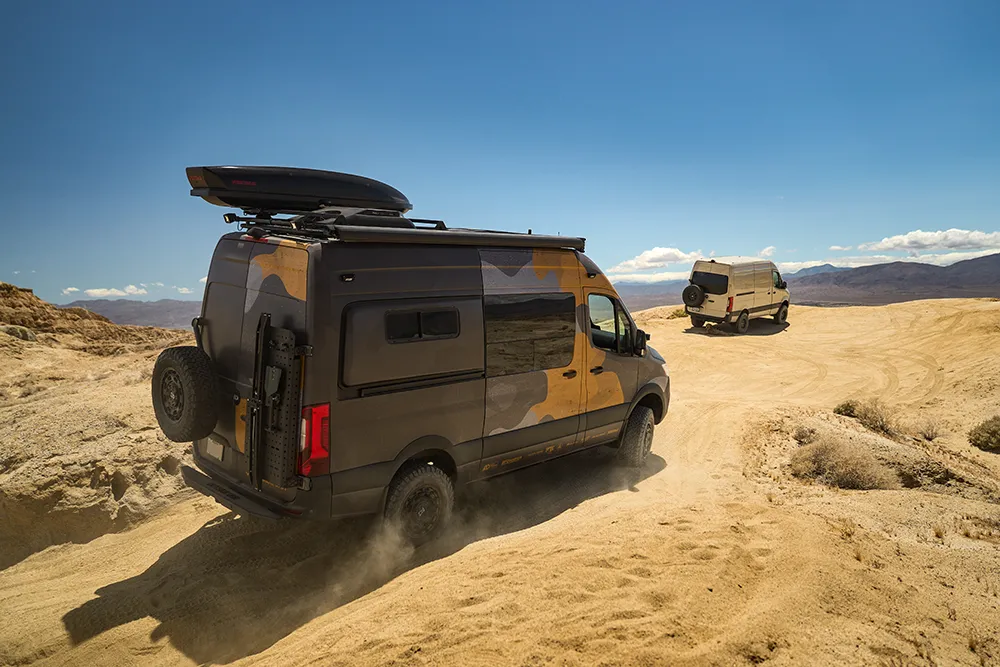
The Problem: Traction Loss Comes Before Recovery
Most off-road recoveries don’t happen because a vehicle lacks a winch, they happen because open differentials lose traction when one wheel unloads.
For heavy Sprinter vans, this typically occurs in:
-
- Cross-axle ruts
-
- Off-camber washouts
-
- Loose climbs
-
- Sand and snow
Once traction is lost, forward progress stops—and recovery becomes necessary.
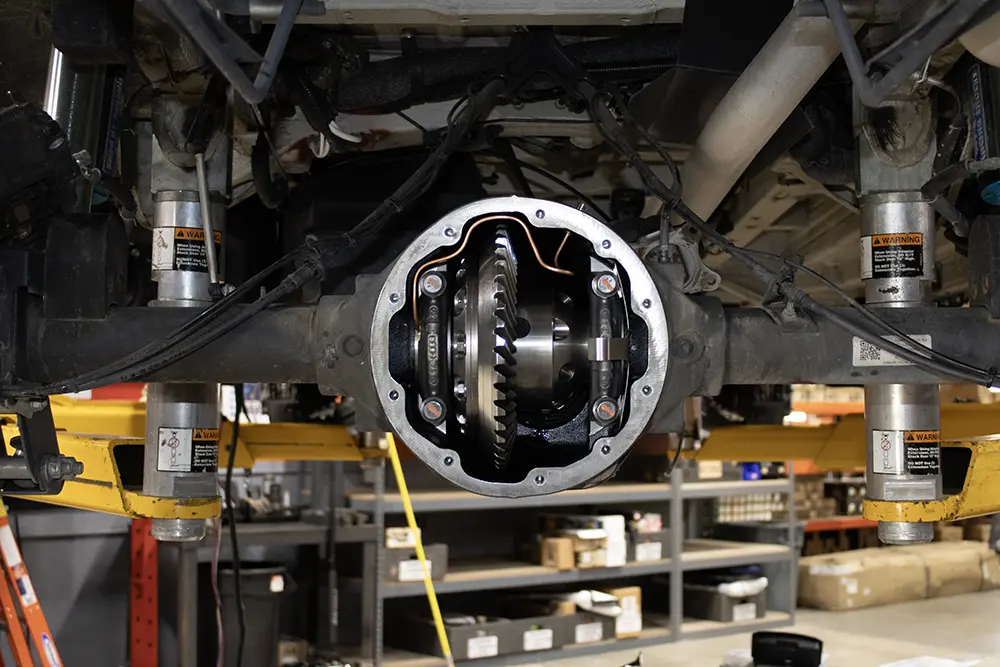
Air Locker — Traction First
If you don’t get stuck, you don’t need to be recovered.
What it does:
-
- Forces both drive wheels to rotate together
-
- Prevents one-wheel spin in uneven or loose terrain
-
- Reduces reliance on brake-based traction control
-
- Enables smooth, low-speed crawling
What it solves:
-
- Prevents “freewheeling” and eliminates the chance of digging a hole with a single tire
-
- Eliminates reliance on traction control systems for power distribution
-
- Reduces heat and wear from traction-control braking
-
- Works continuously during daily off-road driving
Result: consistent forward traction, especially in uneven or off-camber terrain—before recovery is needed.
Why This Matters for Sprinters
Sprinter vans are:
-
- Heavy
-
- Tall
-
- Often fully loaded with camping or expedition gear
-
- Highly sensitive to wheel spin and momentum
In traction-limited situations:
-
- Open differentials send power to the wheel with least resistance
-
- Traction control relies on braking, which can overheat and lose effectiveness
-
- Drivers are forced to use momentum, increasing risk
An air locker keeps both drive wheels engaged, allowing the vehicle to move smoothly and predictably through terrain that would otherwise stop progress.
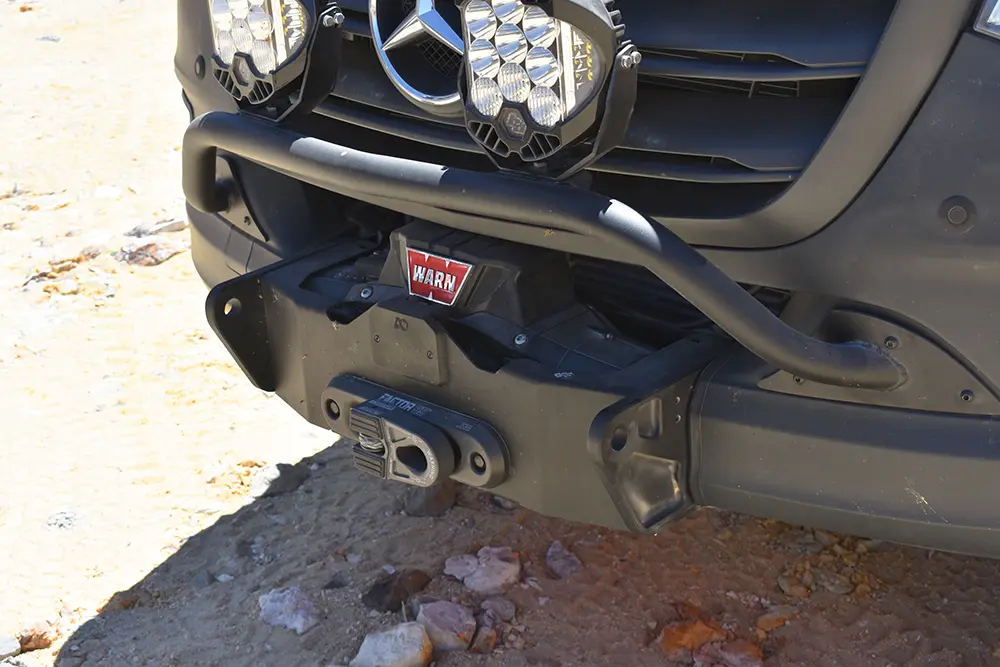
Winch: Backup Recovery
A winch is a reactionary tool designed to extract the vehicle once traction has already failed.
What winch recovery solves:
A winch allows a Sprinter to:
-
- Recover when fully stuck or high-centered
-
- Extract from deep sand, mud, or uneven terrain
-
- Self-recover in remote areas without another vehicle
Winches are essential for worst-case scenarios and should be considered mandatory equipment for serious off-road or remote travel.
Limitations of winch-based recovery:
Even with a winch installed, recovery still involves:
-
- Stopping the vehicle
-
- Exiting the vehicle
-
- Finding or creating a suitable anchor
-
- Rigging the line safely
-
- Managing vehicle stability and line tension
Each winch recovery:
-
- Takes time and physical effort
-
- Introduces risk (line failure, anchor failure, vehicle movement)
-
- Increases fatigue and exposure to mistakes
-
- Can cause trail and environmental damage
A winch is extremely effective, but it is best kept as a last resort rather than a first plan of action.
Why An Air Locker?
An air locker is true, on-demand traction. You get the best of both worlds: open differential smoothness on the street, and switchable traction offroad. Limited slip differentials and automatic lockers tend to chatter and provide inconsistent results, while an air locker is only on when needed. The driver is in complete control of when and where the locking differential is used, and has the option to switch it on and off at speed.
E-lockers use an electromagnet which limits the speed and range at which they can be used. E-lockers are typically found as OEM options on offroad editions of factory vehicles, and have strict limitations:
-
- Vehicle must be at a stop to engage the locker
-
- Can’t be used over 20mph
-
- The electromagnet is weak and can uncouple at speed
An ARB air locker applies 140psi of air pressure to engage the axles, meaning it can be switched on while driving at any speed and will not uncouple while driving.
Recovery Kit: On-Trail Support Gear
Recovery gear supports safe extraction and force management.
Typical components include:
What it solves:
-
- Assists extraction with another vehicle
-
- Provides traction assistance in sand or mud
-
- Supports soft-ground recoveries when paired with a winch or partner
Limitations:
-
- Often requires another capable vehicle
-
- Does not guarantee self-recovery on its own
-
- Traction boards help, but do not replace locking traction
Result: best used alongside a winch or recovery partner for controlled, safer extractions.
Direct Comparison — Air Locker vs Winch vs Recovery Kit
| Category | Air Locker (Traction First) | Winch (Primary Recovery) | Recovery Kit (Support Gear) |
|---|---|---|---|
| Main role | Prevent getting stuck | Solve stuck situations | Support recovery |
| When used | While driving | After movement stops | During extraction |
| Requires external help | No | No | Often |
| Time impact | Saves time | Time-intensive | Time-intensive |
| Skill level | Low once installed | Medium–high | Medium–high |
| Risk exposure | Low | Moderate–high | Moderate |
| Best for | Daily off-road traction | Worst-case recovery | Assisted pulls |
| Works solo | Yes | Yes | Sometimes |
Why This Matters for Real-World Sprinter Travel
Sprinter traction-control systems rely on braking to manage wheel spin. Because this system is reactive instead of proactive, you have to have wheel slip in the first place and then rely on the electronics to recover against it. In extended off-road conditions, this can lead to:
-
- Overheated brakes
-
- Sudden shock loads
-
- Getting stuck!
An air locker provides mechanical traction without braking, making it a more reliable and efficient solution for sustained off-pavement travel.
The Agile Offroad Strategy
Traction first. Recovery always.
-
- Start with an air locker — reduce how often you get stuck
-
- Add a winch — handle worst-case extractions
-
- Invest in a complete recovery kit – manage force safely
Together, they create a balanced, capable off-road Sprinter system.